The Arain Community: Roots, Traditions and a Deep Bond with the Land
Who are the Arains, where do the different accounts of their origin come from, and what has held the community together for generations?
Ask an elderly Arain in a village near Lahore, Kasur or Sheikhupura where the family comes from, and you will usually hear two things in the same breath: the name of a village, and a story about the land. That pairing tells you a great deal about the community. For most Arain families, identity has been tied less to a single ancestor than to a way of life built around fields, water and hard work.
Where the name and the people come from
There is no single, settled history of the Arain origin, and it is worth being honest about that. Several accounts are told within families and repeated in books.
- A popular tradition links the community to Arab settlers who arrived in Sindh in the early eighth century and later moved north into the Punjab.
- Other writers connect the name with words for cultivation and gardening, and see the Arains as one of the old farming communities of the Punjab who became known for growing vegetables and fruit.
- Many families simply trace their history to a particular district before 1947, such as Jalandhar, Hoshiarpur, Amritsar or Ferozepur, and to the long journey that followed Partition.
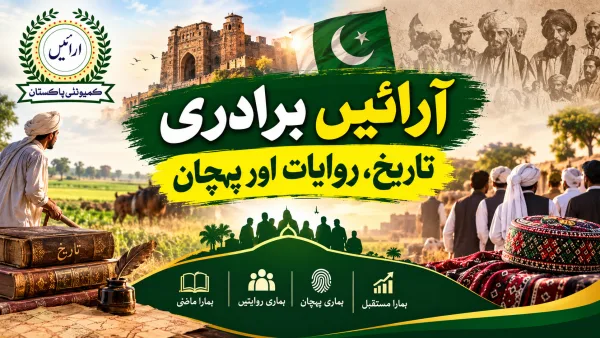
Historians still discuss these questions, and different families hold different views. What almost every account agrees on is the community's long association with agriculture in the Punjab, and that is the part of the story most Arains recognise in their own grandparents.
Gardeners of the cities
Records from the nineteenth and early twentieth centuries describe Arains as some of the most skilled cultivators in the Punjab, especially in market gardening around towns. Vegetables, fruit and flowers that reached the bazaars of Lahore, Amritsar and Jalandhar very often came from Arain fields. In Lahore, the Mian family of Baghbanpura has long been associated with the Shalimar Gardens, and the name of the neighbourhood itself means "the town of gardeners".
When the canal colonies of western Punjab were opened up, many Arain families moved to new land around places that are now Faisalabad, Sahiwal and Sargodha. They brought with them methods of careful irrigation and intensive farming that suited the new canals. Many of today's Arain families in central Punjab can trace their village to that period of settlement.
1947 and after
Partition was a turning point. A very large number of Muslim Arain families lived in what became Indian Punjab. They left homes, wells and orchards that had been in the family for generations and crossed into Pakistan, often with nothing but the clothes they wore. Stories of that journey, of relatives lost and of the first difficult years in a new village, are still told in many households. They explain why the community places so much value on helping one another and on not forgetting where we came from.
Values that have lasted
Every community is diverse, and Arains today include farmers, teachers, doctors, engineers, traders, civil servants and many young people working in technology and overseas. Still, a few values come up again and again when families describe themselves:
- Hard work. Farming close to cities meant early mornings, constant care for crops and a habit of not wasting anything.
- Education. Over the last few decades, many families who once lived only from the land have sent their children to colleges and universities, and see education as the surest way forward.
- Family and biradari. Weddings, funerals and difficult times bring relatives together quickly. That network is a real source of strength.
- Faith and modesty. Religious practice and a simple, respectful way of living are central to many households.
Why a community platform matters now
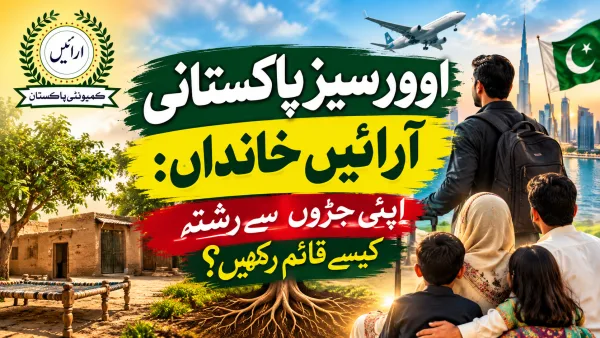
Families that once lived in neighbouring villages are now spread across Pakistan's cities and across the world. Children may know their cousins only through phone screens. A platform like Arain Community Pakistan exists to keep those links alive: to share news, to help students find guidance, to support families who are struggling and to record the history that our elders still remember.
If your family has a story about its village, its migration in 1947 or its early years in a new place, it is worth writing down while the people who lived it are still with us. You are welcome to share such stories with ACP through our contact page. Small family histories, put together, become the history of a whole community.